The UK Crypto Killers
One of the subjects I studied at school was geography.

Ironically, geography turned out to be one of the best teachers of economics. It’s still one of the most interesting subjects I’ve ever studied because it splits the world into two simple lenses:
the nature of the earth, and the nature of people on it.
Human geography, in particular, is just economics viewed through the lens of the environment.
And today, that lens explains exactly what’s happening to crypto in the UK.
Pioneer Plants and Pioneer Industries
In geography, you learn about something called a pioneer plant.
Picture a desolate beach. Nothing there. No life. No structure.
Then, somehow, a small plant appears. Against all odds, it survives. It spreads. It builds.

Over time, those early pioneers transform the environment. They die, decompose, enrich the soil, and make way for more advanced life. Eventually, you get trees. Ecosystems. Stability. Abundance.
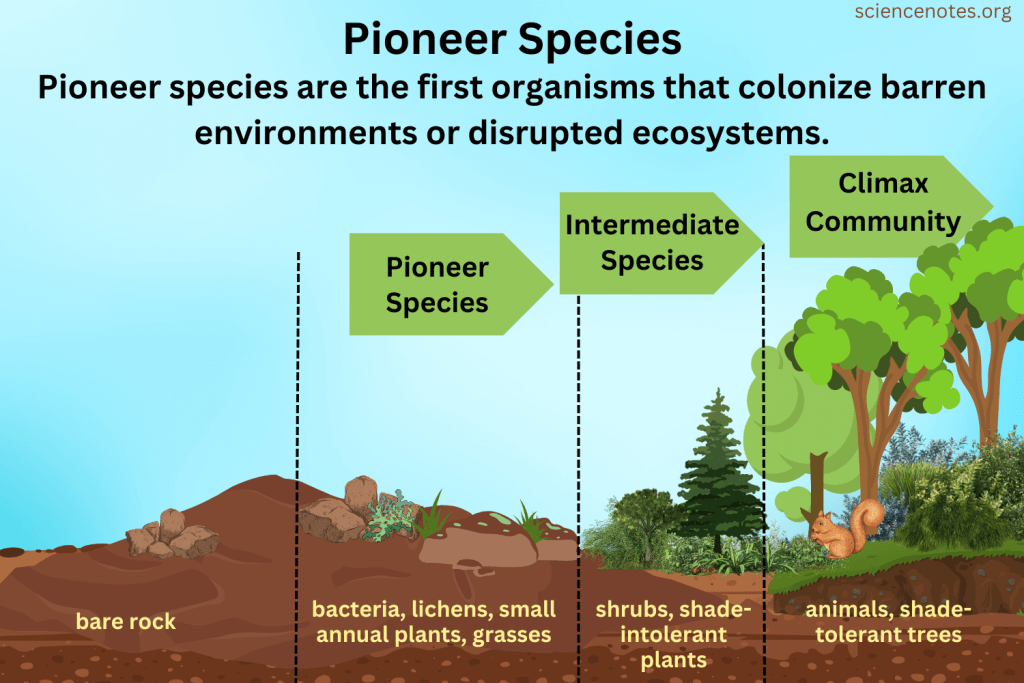
The key point is simple:
nothing starts with trees. Everything starts with pioneers.
Now replace pioneer plants with pioneer industries.
That’s what crypto was that is what the UK tried to kill.
The UK’s Approach: Kill the Seed
The UK, through the Financial Conduct Authority (FCA), has once again made its position clear.
It recently announced a crackdown on what it calls “illegal crypto trading”:
Let’s be precise about what this actually means.
Peer-to-peer traders operating without a license were warned, fined, and in some cases raided.
The penalty? Unlimited fines, potential prison time, and exclusion from the financial sector.
Think about that for a second.
Activities that were once a natural starting point for entrepreneurs, buying and selling crypto for other individuals has been reclassified into criminal behavior unless you can afford a license.
This is how they’re prevented from ever forming they see small entrepreneurs as weeds in their garden and act as weed killers

This is not how ecosystems grow.
Not at all to be confused to raids on Scam and fraudulent enterprises like this one that very much deserve to get crushed Office of Public Affairs | Coordinated Takedown of Scam Centers Leads to at Least 276 Arrests; Alleged Managers and Recruiters Charged in San Diego | United States Department of Justice
Regulation or Protectionism?
The justification is always the same: consumer protection.
But look closer.
There were no major fraud cases cited in this crackdown.
No large-scale consumer harm being addressed.
Instead, the focus was on unlicensed activity and potential risk.
Potential.
Meanwhile, the very risks they point to money laundering, systemic abuse exist openly within traditional banking systems.
The difference?
Those systems are already established. Already protected.
What you’re seeing is not protection. It’s control.
Licensing, in this context, acts as a gatekeeping mechanism.
It ensures that only well-capitalised players, often already successful elsewhere, can enter the market.
The result?
Foreign-grown “trees” are allowed in.
Local “seeds” are destroyed before they can take root.
The Death of the Natural Path
There used to be a natural progression in any emerging industry:

Start small.
Learn the trade.
Earn capital.
Scale up.
Build infrastructure.
In crypto, that might look like:
Peer-to-peer trading → brokerage → exchange → ecosystem.
But in the UK, that first step is now effectively blocked.
If you can’t afford the license, you can’t even begin.
So what happens to the next generation of entrepreneurs?
They don’t build.
They leave.

The Bigger Picture
This isn’t just about crypto.
It’s about how the UK treats its own innovators.
I’ve written about this before here:
In that post, I talk about how Western economies, particularly the UK, have become disconnected from the reality of what businesses actually are.
They’re not public utilities.
They’re not social tools.
They are engines of creation.
And when you punish the people who build them, you don’t protect society.
You hollow it out.
The Spice Must Flow
Despite all of this, one thing doesn’t change.
Demand doesn’t disappear.
Innovation doesn’t stop.
It moves.
As they say in Dune:

“The spice must flow.”
If you’ve made it this far, here’s a small gem, a history lesson many people have forgotten.
Over 13 years ago, the UK worked with foreign banks to prevent a number of cryptocurrency exchanges from obtaining bank accounts. Demand for crypto transactions, however, was extremely high and continuing to grow. In response, a number of these exchanges collaborated to create what we now know as stablecoins.

In other words, the first stablecoins were born out of regulatory pressure. The very regulations designed to restrict or suppress the industry ended up making it far more resilient. Over time, banks began investing heavily in these same exchanges, and a select few were ultimately allowed to operate anyway defeating the point.
Crypto will continue to grow.
Transactions will continue to happen.
Wealth will continue to be created.
Just not on UK soil.
It will happen offshore.
In jurisdictions that allow pioneers to exist.
A Message to Entrepreneurs
If you’re in the UK and looking at this space, understand the reality.
You’re not operating in a neutral environment.
You’re operating in one that actively works against early-stage innovation.
So you adapt.
You build where can build.
You grow where can grow.
And you return later, stronger and well armed.