Have We Forgotten the Purpose of Entrepreneurs?
I was on a dog beach in Dubai with a friend, walking her dog under the morning sun. It was already getting hot, and I started to feel thirsty.
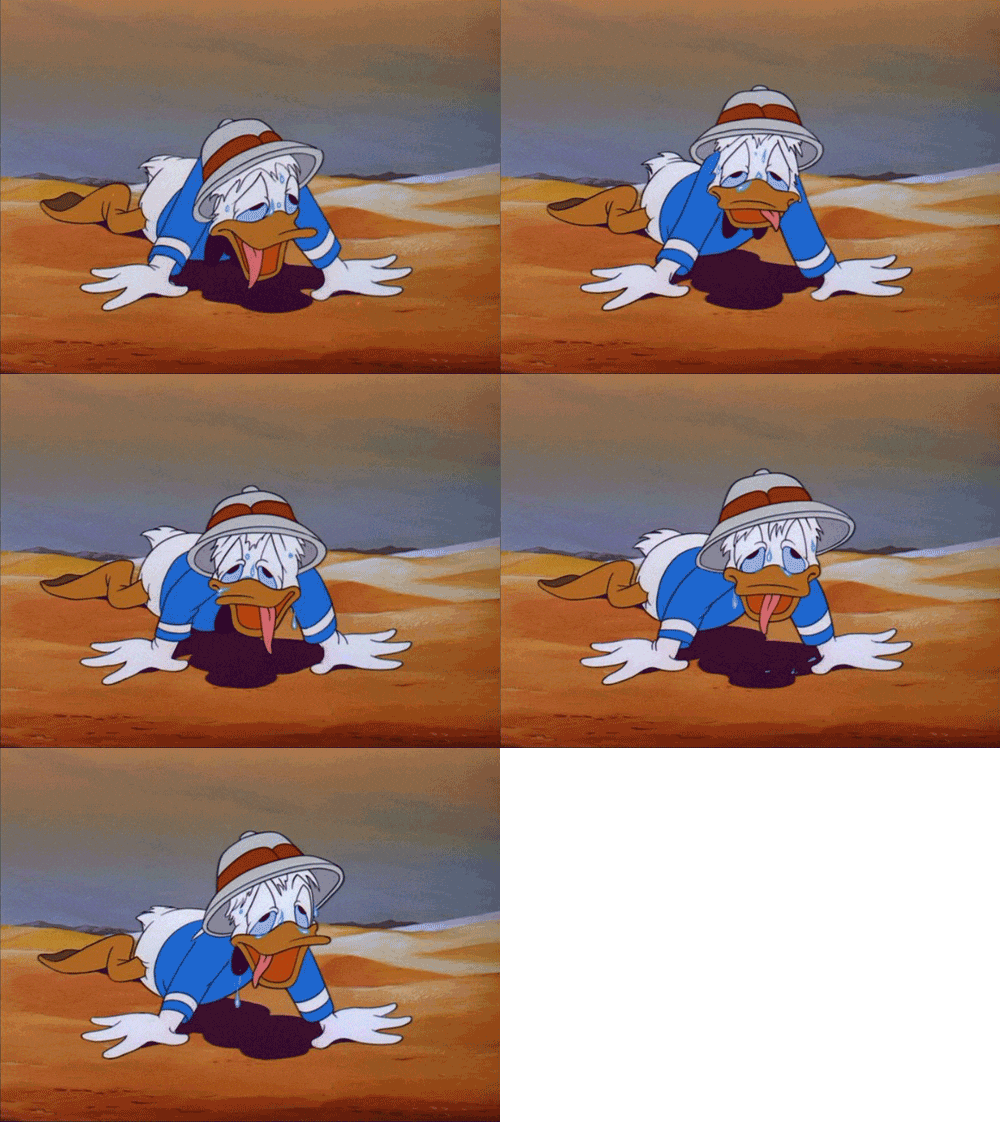
She mentioned there was a shop about a seven-minute walk away. I headed off, only to find it closed, possibly even shut down for good. At that point, the heat was kicking in.
On the way back, a security guard pointed me in another direction. “Ten minutes that way, there’s a Starbucks.”
So I walked again. And walked. And for a while, I couldn’t see anything. Then finally, I spotted it.

Relief.
At first glance, it looked closed. Early morning, lights low, boxes outside. But it was open. Three staff inside, getting things ready.
I went in and bought what I needed. A drink, water, some snacks.
Transaction done. Problem solved. It was the only business around and open at this time! I needed service and i was served that’s it the purpose of business is to serve us.
What Actually Happened There?
It’s simple:
- I needed something
- A business provided it
- I paid for it
- They employed people to make it happen
That’s it.
No deeper social contract. No moral obligation beyond the exchange. No expectation of anything more.
And yet, in much of the West, we’ve complicated this to the point where we’ve forgotten what businesses are actually for.

The Core Function of Business
At its most basic level, a business exists to do four things:
- Serve people
- Reward risk-takers
- Scale what works
That’s the model. That’s the engine.
And importantly, it works.
Where Did We Go Wrong?
Somewhere along the way, particularly in the UK and across the West, expectations shifted and we expect entrepreneurs to do alot of heavy lifting.

Now businesses are expected to:
- Solve social problems
- Redistribute wealth
- Act as moral arbiters
- Fund public services
And if they don’t?
They’re criticised, boycotted, or worse.
This is exactly the kind of thinking challenged decades ago by Milton Friedman in his essay:
His argument was straightforward: the responsibility of a business is to its owners and shareholders, within the rules of the game.
Something that has become vilified in the west.
The Starbucks Example
Take the ongoing debate around Starbucks in the UK.
Recent reporting highlights how its UK retail arm paid no corporation tax in a given year:
This sparks outrage.
But step back for a second.
When I walked into that Starbucks in Dubai, I didn’t care about its tax structure. I cared that:
- It existed
- It was open
- It served me what I needed
That’s what mattered in that moment.
Corporation tax in the UK is already high, around 23%. On top of that, businesses face taxes on employment, dividends, and more.
Yet the public conversation increasingly ignores what businesses provide and focuses almost entirely on what can be extracted from them.
The Entitlement Problem

There’s a growing mindset, particularly among segments of younger, more left-leaning populations, that sees businesses as entities to be pressured, controlled, or even punished.
In extreme cases, this spills over into hostility and criminal action, like this reported arson case:
That’s not just protest. That’s a breakdown in how people view the role of enterprise in society.
When businesses are no longer seen as value creators but as targets, something has gone wrong.
The Reality of Capital
At the heart of this issue is a simple question:
Who controls capital?
If someone:
- Takes a risk
- Builds something
- Provides value
- Earns profit
Who has the right to decide what happens to that profit?
Increasingly, governments and public pressure attempt to answer: we do.
But capital is mobile. If you tax it heavily, restrict it, or penalise it, it moves. Or it stops being created in the first place.
And then what?
Fewer businesses. Fewer jobs. Fewer services.
You end up like a desert.
A Simple Thought Experiment
Imagine your town has no coffee shops.
None.
Then someone opens one.
Do you care:
- How much corporation tax they pay?
- What licences they’ve filed?
- Whether they meet every abstract social expectation?
Or do you just care that you can finally get a coffee?
Most people, in that scenario, would choose just the coffee.
But in developed economies, where choice is abundant, we’ve become detached from that reality. We assume businesses will always be there.
So we pile on expectations.
And then act surprised when they leave or shut down.
Final Thought
The least important aspects of business, tax payments and regulatory compliance, have become the most talked about.
Meanwhile, the most important function, serving people well, is taken for granted.
We’ve gone from valuing businesses for what they provide to judging them for what can be extracted from them.
And that shift has consequences.
Because if businesses stop existing, stop expanding, or stop taking risks, then all the things we rely on every day quietly disappear with them.
Sometimes, all you really need is a cold drink on a hot day.
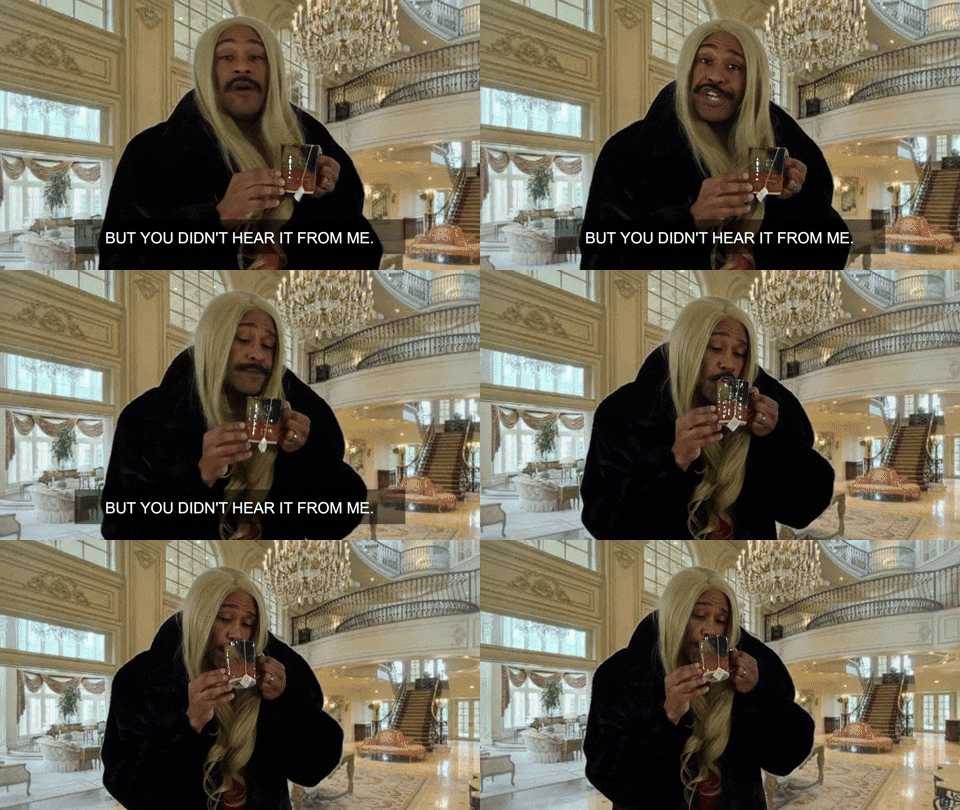
And a business willing to provide it.