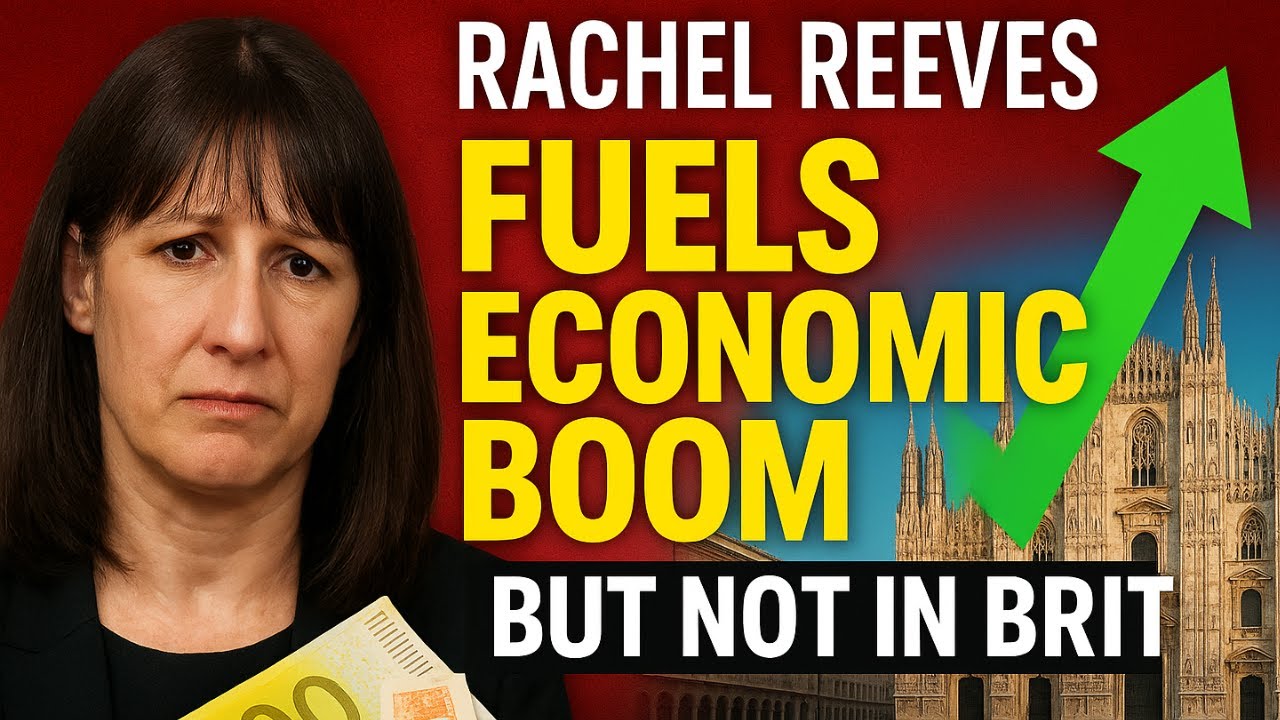
Observing the decline of the UK economy feels like watching a slow-motion car crash.

I have written about this before, here in 2023 and here in 2022 unfortunately not much has changed so lets start with unpacking whats going on and then look at what we can do to sidestep the inevitable equilibrium shift …grab your popcorn.

The door to communist aka the path to serfdom
- Boris Johnson started it by unlocked the door to communism in the UK by Introducing a command economy during the covid lockdowns.

-
He went on to promote a more collectivist feminine society https://www.youtube.com/watch?v=NgExznhC2Yc ultimately pushing a Net Zero—anti-growth, anti individual wealth creation aka communism.
-
Rishi Sunak with pro remain Jeremy Hunt who’s wife is a major player in the Chinese Communist Party Opened the door to communism
in the UK after committing a red wedding style coup on Liz trust with the help of the bank of England.

This was followed by a reduction in the capital gains allowance, increased in corporation tax, increased regulation on business, increased taxes on north sea oil, increased tax on insurance premiums, increased subsidies to net zero project and a wide range of tax increased e.g the removal of the non dom tax status to benefit EU competitors and removal of VAT free shopping to name a few.
- Quite predictability Kier Starmers labour government is marching strait though this unlocked door and taking the UK down the path to communist, socialism collectivism call it what you like.
They doubled down by raising taxes even more, reinforced additional anti growth policies and focused on pushing legislation and laws that erode private property rights (capitalism) tilting and pushing the UK though this door kicking and screaming.
The civil service is full of traitors
The UK civil service shows signs of institutional bias, with many civil servants appearing hostile to national prosperity. Their prevailing mindset seems focused on dismantling the traditional industrial-growth model in favour of an eco-centric economy, often at the expense of economic strength. This bias frequently aligns more with EU interests than with the UK’s, as most senior civil servants remain pro-Remain even after Brexit. As a result, regulations are often shaped to mirror EU standards despite there being no obligation to do so.

The combined effect is wealth destruction, policy capture, and the use of questionable economic data to justify such decisions.
The UK doesn’t have a cost of living crisis it has a cost of government crisis
The UK faces a cost of government crisis rather than a cost of living crisis, driven by relentless regulatory and legislative overreach.

Businesses are being suffocated by an endless stream of new rules, including the Renters’ Rights Bill, Employers’ Rights Bill, HMRC’s fire reporting requirements, and an ever-expanding web of eco-legislation. At the same time, the civil service and state bureaucracy continue to grow unchecked, leaving government increasingly viewed as an obstacle to prosperity rather than an enabler of it. There is however lots of opportunity for corruption.
Alongside these traitors area host of foreign bad actors

In the UK today, groups that seem intent on the country’s decline hold influence—those advancing Net Zero, pro-EU agendas, and external rivals such as China and Russia. Net Zero is presented as a strategy to cut carbon emissions, but in practice the quickest way to achieve it is by restricting economic growth—and in the UK, that approach is succeeding.
Likewise, Remainers view weakening the economy as the surest route back into the EU: by making Britain appear poorly governed and uncompetitive outside the Union, they strengthen their argument, and so far, they are succeeding as well.
Russia also benefits from a stagnating UK, as economic decline erodes public support for Ukraine in the ongoing war.
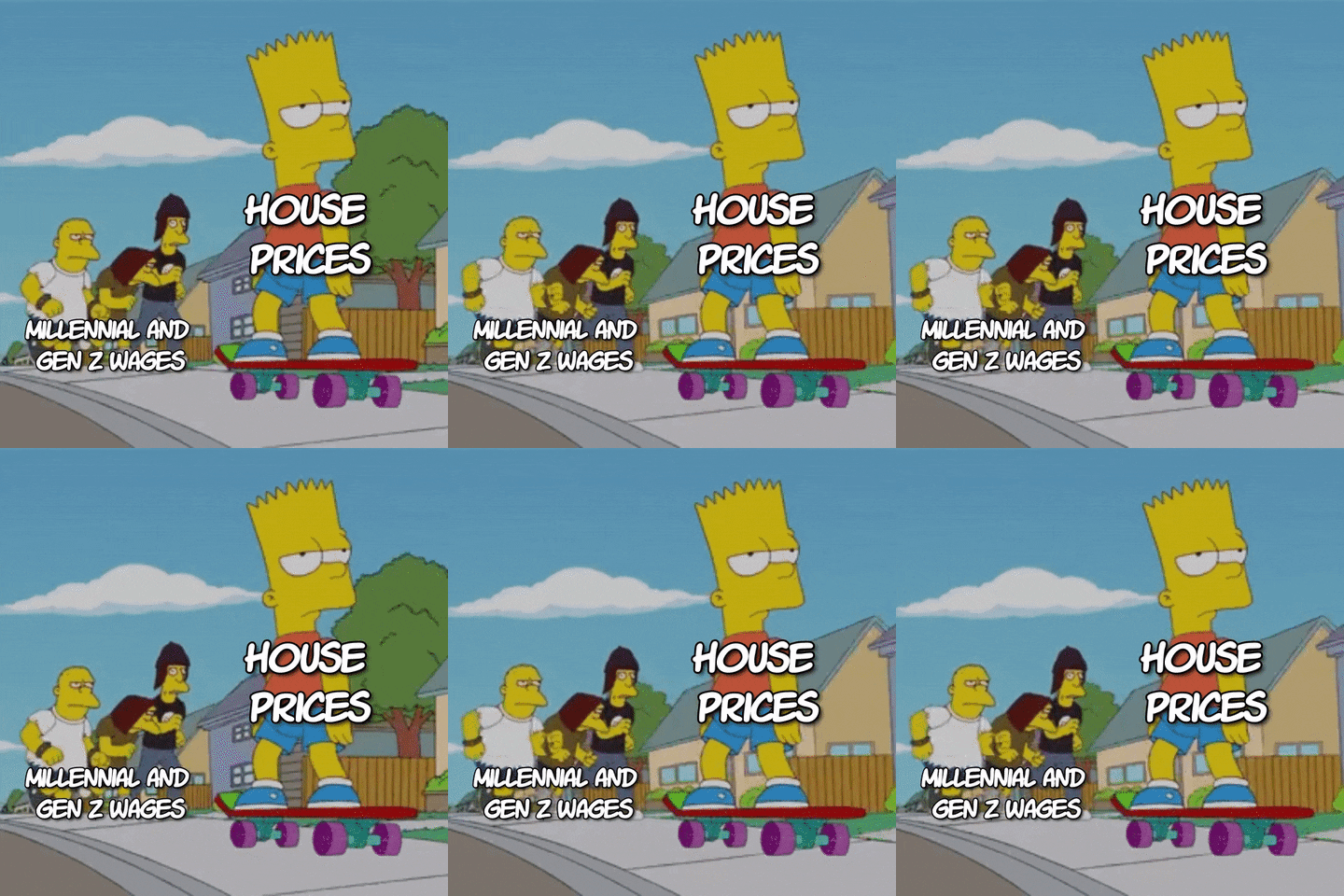
Domestically, calls for lower house prices—framed as a path to greater affordability—translate into policies that punish property investors, further suppressing growth. The irony is that this creates higher barriers for ordinary people to buy homes, while giving foreign investors steep discounts on UK property.
Taken together, these pressures could be countered, yet instead they are left unchecked, making the UK’s decline feel both predictable and terminal. History teaches that empires collapse when more people want them to fail than to succeed.

The old “nation of shopkeepers” ethos that once defined the UK is fading fast.
In its place is the rise of a statist society, where more people are dependent on government handouts and the entrepreneurial class is shrinking. Hardworking, honest individuals find themselves most at risk, heavily penalised under a system that increasingly leans toward socialism. Within this framework, the Nash equilibrium shifts—securing state support becomes more rational than striving independently, since the state itself is in the business of picking winners and losers.

At the same time, the UK government appears determined to control nearly all capital allocation. Yet it has shown itself to be deeply ineffective at managing capital, punishing those skilled at wealth creation through high taxation. This centralisation of resources doesn’t just stifle productivity; it also creates new opportunities for corruption, as those controlling the flow of public capital gain enormous personal power and wealth.
So what can you do ?

For investors, the strategic outlook requires realism where you keep your eyes open: UK policy is unlikely to change direction anytime soon, so the priority is to position for profit rather than fight the tide.
That means considering options such as shorting the pound, moving assets offshore, or even leaving the UK entirely.
Or a virtual exit if not a physical one diversifying internationally while retaining flexibility offers protection while keeping the door open to re-enter selectively if genuine opportunities emerge.
Should the decline deepen, an eventual intervention could trigger pro-growth reforms by slashing regulation and curbing the state, but until then, diversification in say crypto and caution remain the most prudent course.