
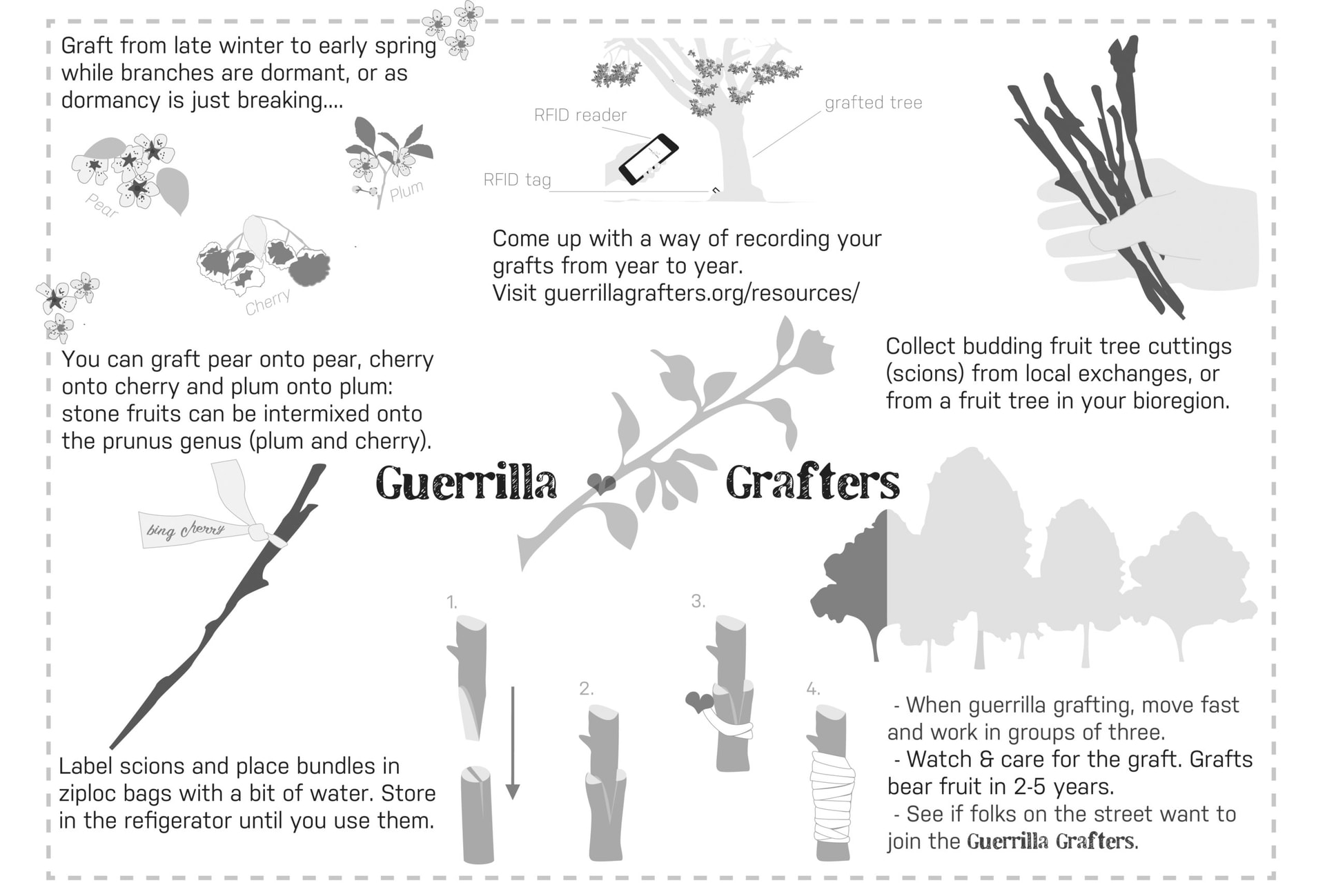
I found a group in San Francisco called the Guerrilla Grafters. They walk up to the city’s ornamental fruit trees, the ones bred to blossom beautifully and never produce a single pear, and they graft fruiting branches onto them. A few seasons later there is free fruit hanging over the pavement for anyone who wants it.
Someone on Instagram called them “chaotic good”. As a D&D fan I cannot improve on that. This is disruptive altruism at its purest: see a problem, pick up a knife, fix it, don’t ask.
https://www.guerrillagrafters.net/
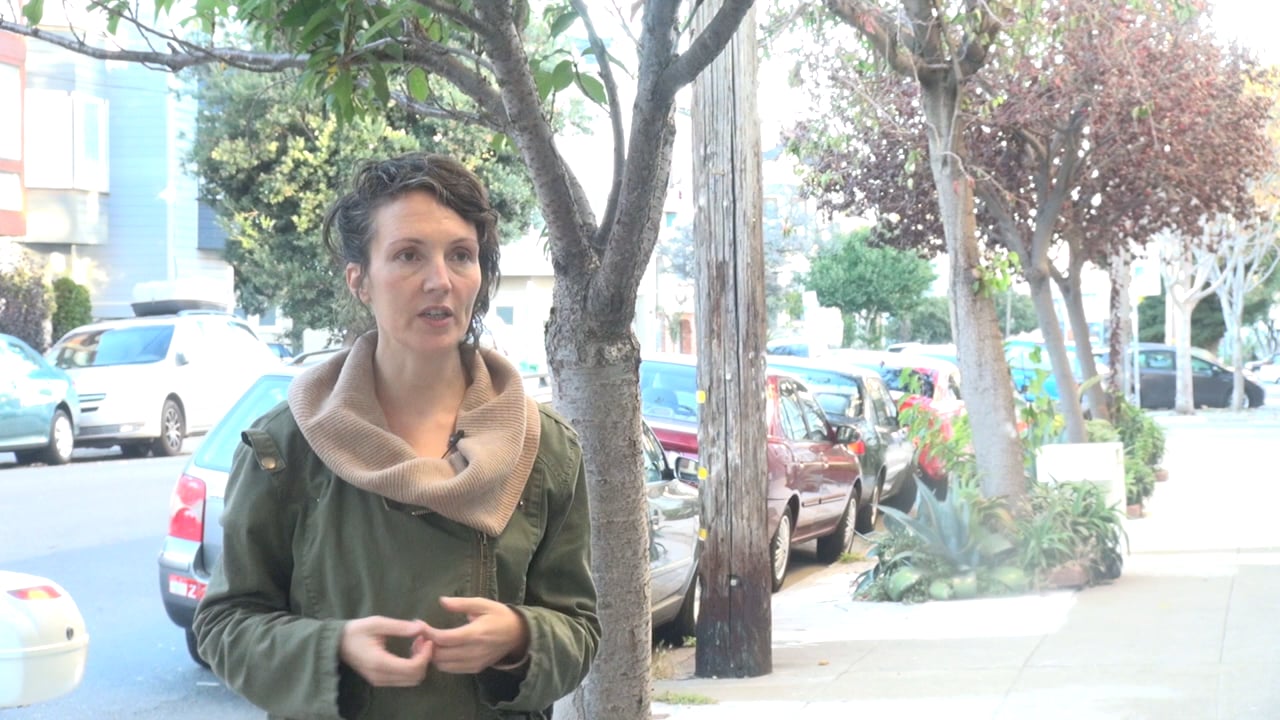
The case study: forbidden fruit
San Francisco has over 100,000 public trees, more than 10,000 of them apple, plum, pear and other fruit varieties, and the city deliberately planted them sterile to avoid mess and animals. Read that again. Ten thousand fruit trees, engineered not to fruit, in a city where 8,323 people were counted homeless on one night in January 2024. The SF-Marin Food Bank has put the number of residents facing the threat of hunger or poor nutrition at one in four.
-
2012: The grafters go public. NPR visits a “crime scene” and can’t say where it is, because the grafters fear city officials, who manage the trees and say fruit trees on pavements are illegal, could come after them. The same year the project is shown in the US Pavilion at the Venice Biennale. Criminals in SF, art in Venice.
-
2014: A TEDx talk in San Jose, “From Sterility to Fruit”.
-
2015: They start tagging grafts with RFID chips and Arduinos to track which ones take. No penalties so far, and city officials admit this is partly because there isn’t funding to maintain the trees anyway. The state banned the fruit, then couldn’t afford the tree.
-
Today: Grafting is still classified as vandalism by San Francisco’s Department of Public Works. If it’s on a pavement it’s publicly owned, and touching it is a crime.
-
My question is if its the government doing it for public property why is capitalism blamed?
The excuse is always the same
I have had this argument before. Why don’t we have public fruit trees everywhere then everyone could have free food? In the UK the answer is always litter, or rot, or rats, or health and safety, or someone slipping on a plum. The excuse changes. The address on the letterhead doesn’t.
I remember standing in Piccadilly Circus with London’s tree pollen hitting my eyes like grit and thinking: if these were fruit trees they’d be female, and all this desperate male pollen would have something useful to do. Then I went to Spain and saw fruit trees with nets slung beneath them like upturned umbrellas. Fruit drops, net catches, people collect. Genius. Nobody died.
Seville has run the numbers for real. The city has 48,000 orange trees producing around 5,700 tonnes of fruit a year, employs about 200 people to clear the fallen ones, and in 2021 started a pilot to turn the surplus into electricity. A council can manage falling fruit when it decides to. The “health” excuse is a choice.
Pear is my favourite fruit, for the record. Free pear juice stalls on every corner is not a utopia. It’s a permit.
Then they blamed capitalism
Here is where it got painful. Two clicks into their site and the mission is to unravel “capitalist civilization one branch at a time”. Their founding essay argues scarcity is a condition capitalism creates.
Name the capitalist. Go on. One name. Which entrepreneur, which shop owner, which fruit farmer is out there at night ripping scions off pear trees? None. The people stopping them are the Department of Public Works. A city department. The state.
Even if a supermarket chain hated the idea (they don’t; nobody is losing sleep over 40 pears in Hayes Valley), it would still need the state to enforce that view. The state chose to. And the grafters’ proposed fix for a problem caused by the state is: more state. That is not a strategy. That is a loop.
Capitalism, at its core, is private property rights. What people are actually angry about is an ownership and control structure run by elites, who almost always operate through government. Attack the property rights and you don’t touch the elites. You just hand them the keys to everything else.
Confusing Angels and devils an economic case study:Octopath Traveler II
Octopath Traveler II explains this better than most economics degrees. Partitio Yellowil, the Merchant, gets a whole storyline that is basically an economic origins tale.
His father and a business partner, Roque, buy a patch of the Wildlands hoping for silver. They find it. The mining town of Oresrush booms. Then steam technology arrives, demand for silver collapses, and the new owner raises the rents and taxes until the town is in a deep depression and the people who built it are in debt to the man who built it with them. In the game your character Partitio, still a kid, uses his business brain to buy out the town’s debt and set everyone free.
That is the angel. He turns up with capital when you have none, solves the problem, and leaves you better off. Anyone who has done a startup has met one. We literally call them angel investors. Partitio’s stated life goal is to eliminate poverty entirely, and his tools are commerce, investment and industrial technology. He spends the rest of the game trying to buy the rights to the steam engine so the whole world can use it, and eventually does exactly that. One of his quotes from the game is “Wowie, lookit those peaches of yours! Nice ‘n’ round ‘n’ juicy!” which i thought was very relvant for this post.
Roque is the devil. The cut-throat. He doesn’t care about growth, only about the numbers going up and the control that comes with them. When Partitio arrives with the money to buy the engine, Roque refuses to let it go tries to kill him. His end goal is 100% market share through the state (in other circles this is called communism, where one collective owns everything on your behalf and you become its tenant).
Societies fall over when the devils outnumber the angels. Groups like the grafters only ever describe Roque, then propose handing the whole economy to the very same person in the form of the government.
What a city could do tomorrow
-
Legalise grafting on public ornamental fruit trees and publish an approved scion list.
-
Nets under the trees and a harvest rota, Seville style. Fallen fruit gets collected, not litigated.
-
Let residents adopt a tree. The city already admits it can’t afford to maintain them.
-
Licence juice stalls and jam makers to use the harvest. My pear juice dream is one permit away.
-
Download the grafters’ kit (it’s on their site and on GitHub, translated into several languages) and graft on private land with permission this winter.
Where Causevest fits
Causevest has to be a broad church. This left versus right theatre needs to end, because it keeps pointing the crowd at each other while the person with the permission slip walks off.
Causevest Coin is a voting tool. Proof of Cause lets people put money directly behind the causes they believe in, and lets a project like the grafters be funded and backed by its own community without filling in a form at Public Works and waiting twelve years. Grafting is exactly the kind of cause we built it for: cheap, local, high impact, and fought by the wrong people for the wrong reasons.
We are reaching out to them. If they say yes, brilliant. If they tell us capitalism is the problem, we’ll bring the pears and have the argument.
In fairness
They are not wrong about everything. Scarcity often is manufactured. Elites do rig markets, and they do it through the state as often as through the boardroom. And the grafters have done more with a pocketknife and some tape than most councils manage with a budget. You can disagree with a group’s theory and still recognise they are living their values while you type.
The world is changing fast. The tools for people to organise and fund things outside the state are getting better every year. Together we can expand what people are allowed to choose, and how loudly they get to say it. Starting, ideally, with a pear or orange I guess.