AI doesn’t mark the End of Capitalism. It’s the Beginning of Its Golden Age

There is a growing narrative spreading across politics, media, and public conversation: capitalism is failing we are in late stage capitalism bla bla bla.
We are seeing renewed interest in socialism, rising sympathy for communist ideas, and an increasing tendency to blame capitalism for economic hardship.
Governments across much of the Western world have shifted toward heavier regulation, stronger labour protections, and greater state involvement in markets. Yet constantly we hear about the failures of capitalism. To many observers, this looks like the end of the capitalist era.
But the irony is this:
The age of capitalism is not ending. It is just beginning.

Capital Will Matter More Than Ever
History rarely changes as much as people think. The fundamental question has always remained the same: who owns capital, and who does not?

In the coming decade, that divide will become sharper.
If you do not own assets, you are increasingly exposed. Stocks, property, equity, intellectual property, digital infrastructure, and productive tools will define economic security. Ownership will matter more than employment.
This is not new. What is new is the speed at which technology is accelerating the advantage of ownership over labour.
The Fear Around AI Is Misplaced

Artificial intelligence has triggered widespread anxiety, especially among workers. Much of the political reaction reflects this fear. Governments have attempted to strengthen labour protections, raise minimum wages, and increase employment regulation to shield workers from corporate power.
Yet these policies often produce unintended consequences.
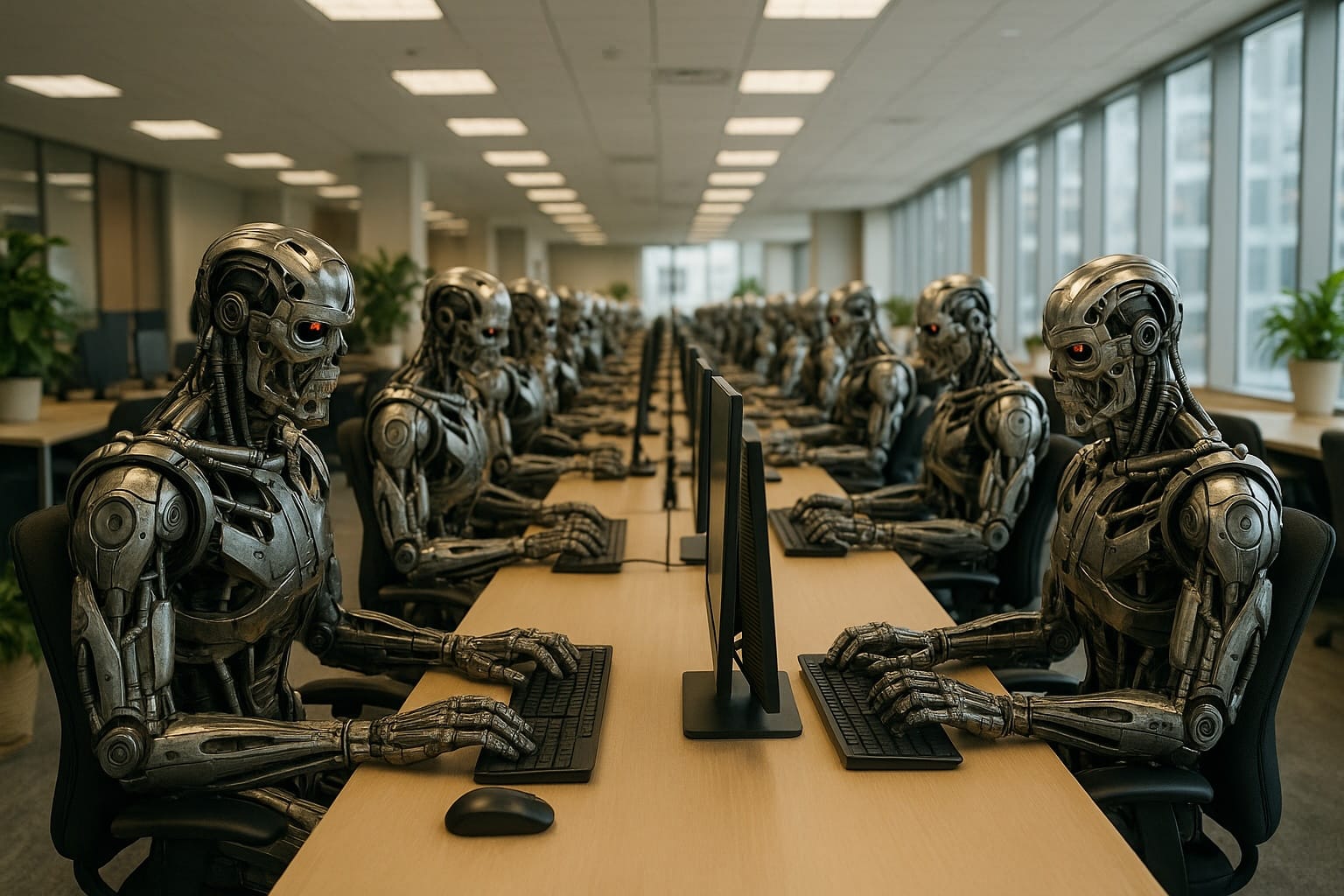
In many countries, hiring someone now comes with significant additional costs. Employers face employment taxes, compliance burdens, and rising wage obligations. In places like the UK and across parts of Europe, businesses effectively pay a penalty simply for employing people.
Incentivise entrepreneurs to do exactly the opposite.
Who Benefits Most From AI?
The answer is simple: capitalists.
Anyone who owns productive assets gains leverage. Entrepreneurs, business owners, investors, and builders now have access to tools that dramatically multiply output without multiplying costs.
A single motivated individual can now launch businesses, develop products, manage operations, and compete globally in ways that were impossible just a decade ago. The small, agile capitalist gains capabilities once reserved for large corporations.
AI lowers the barrier to execution while increasing the value of ownership.
Even industries historically dependent on labour are shifting. Automation in logistics, manufacturing, and transportation shows how machines increasingly replace repetitive roles. The value moves away from performing labour and toward owning and controlling the systems that produce outcomes.
This technological shift empowers individuals willing to build, invest, and take risk in a culture that is actively discouraging people to do so.
Ironically, government policies that aim to protect labour may accelerate this transition by making automation economically irresistible.
Why Aren’t We Encouraging More Capitalists?

If AI strengthens ownership and enterprise, then the logical response should be clear:
We should be encouraging people to become capitalists.
Instead, much of modern culture still promotes lifelong dependence on employment alone. The identity of being purely a labourer is increasingly fragile in a world where productivity tools scale exponentially.
Becoming financially free is equated with being “socially useless” in many societies in the west.
The future belongs to builders, owners, and innovators.
This does not mean work disappears. It means work changes. Value shifts from manual contribution toward strategic control, creativity, and ownership.
The Real Opportunity
AI aka the fancy predictive chatbot is just a tool and like every tool it , it rewards those who adopt it early and use it intelligently.
The coming era will not eliminate capitalism. It will intensify it.
The real divide will not be between humans and machines.
It will be between those who use AI to create capital and those who still rely solely on selling their labour.
The question is not whether capitalism, blockchain tech or AI survives.
The question is who will benefit from its future and the winners will be those that hold the future of capital which is looking more and more likely to be intrisincly linked to blockchain technology.