Crypto hacks are in the news again. Having the freedom to hold your own assets is a strength, but it also creates new risks: the compromise of a single computer, or the loss of key material, can lead to billions in stolen funds.
It doesn’t have to be this way. Techniques to blunt these attacks, without relying on trusted middlemen, have existed for over a decade, yet most chains, exchanges and organizations have never implemented them. We have.
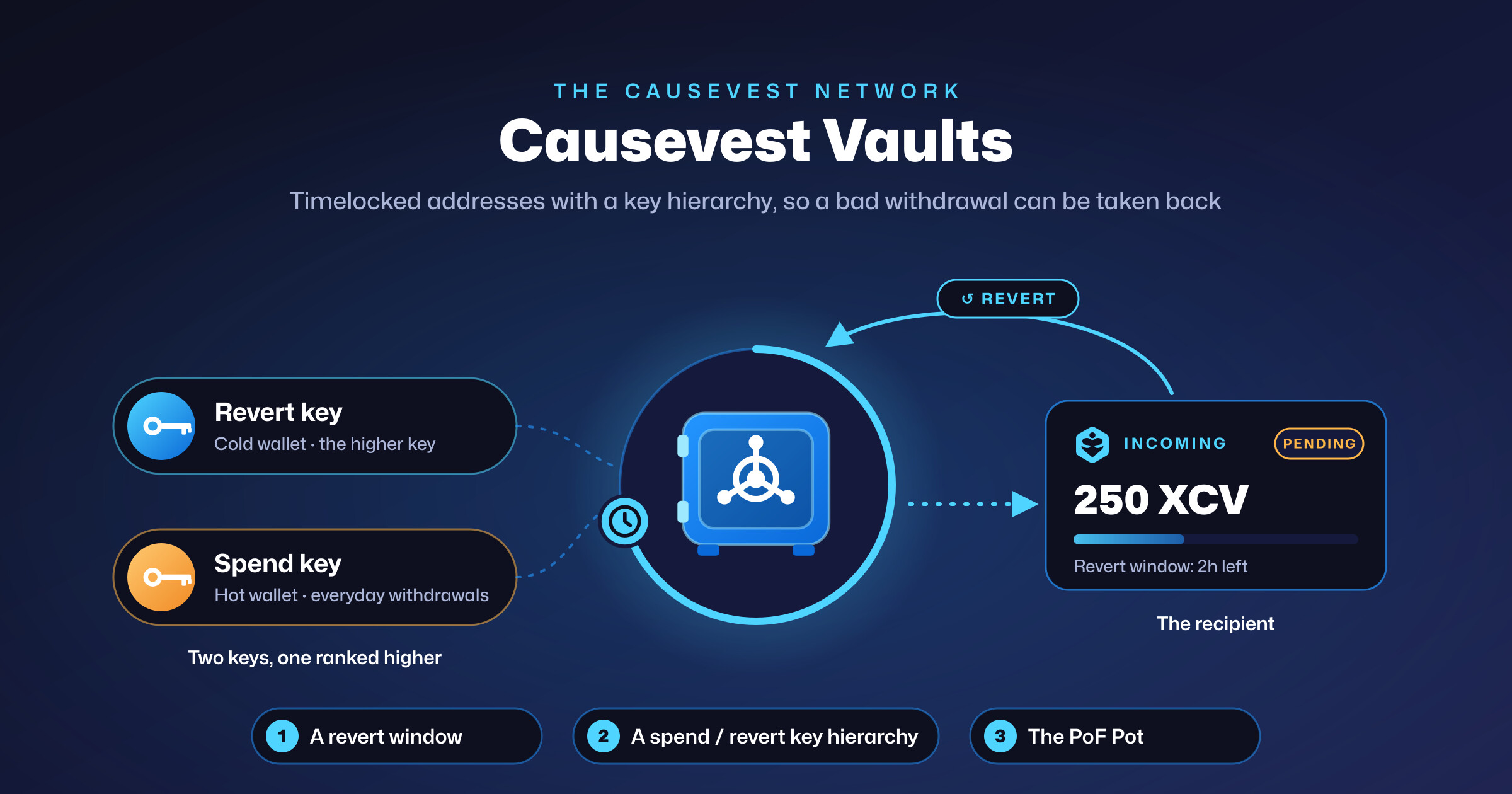
The basic idea of a Vault on the Causevest Network is simple: it is a timelocked address. When a withdrawal from a vault is submitted, it can still be reverted until the vault’s lock time has passed. The lock time is chosen when the vault is created, from 30 minutes up to roughly a month, and we were careful to make sure the recipient is aware of it: wallets show incoming vault funds as pending, with the remaining revert window, rather than as spendable.
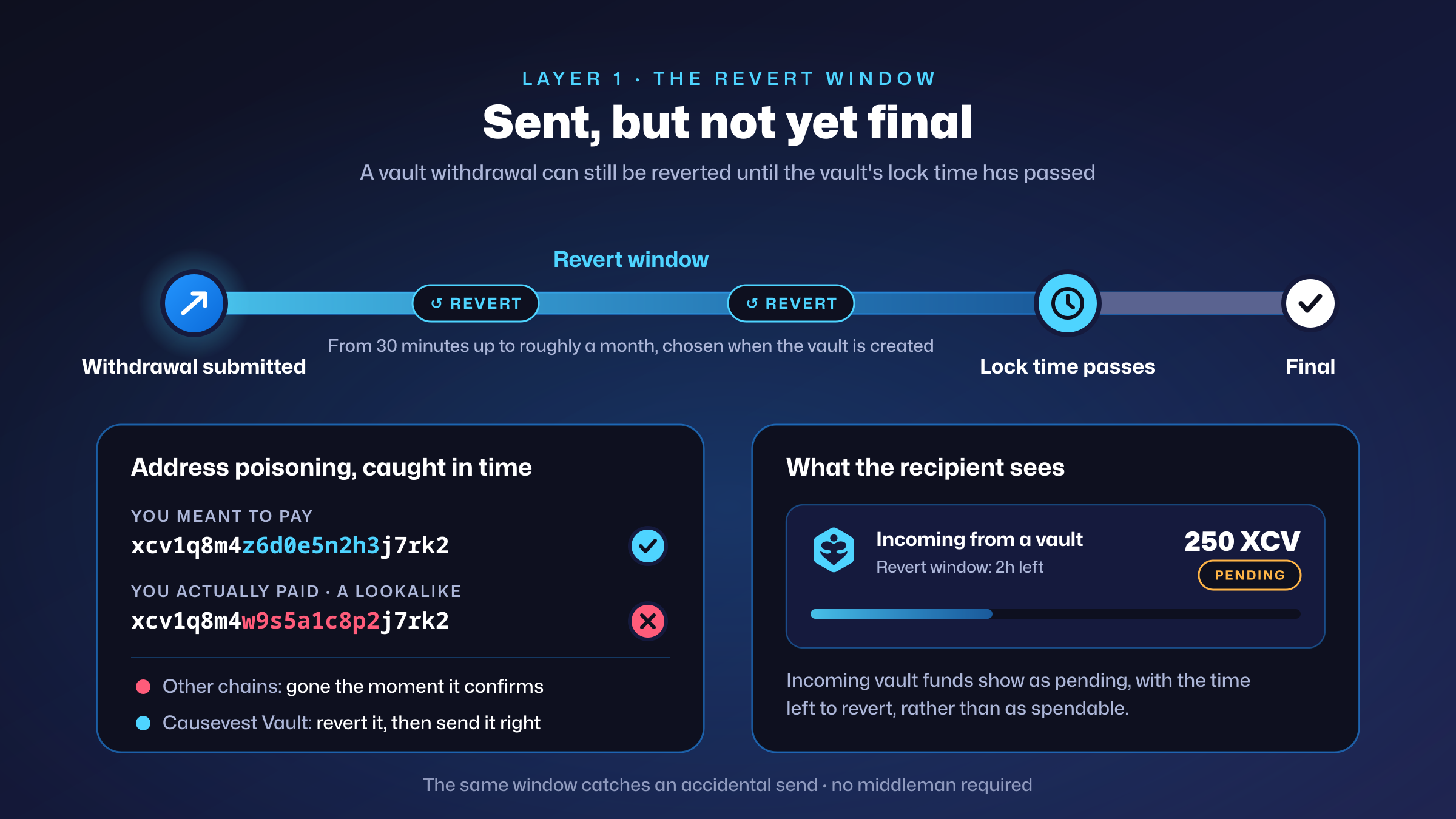
The revert window on its own lets users protect themselves against accidental sends and address poisoning (where an attacker crafts an address that looks very similar to one the user regularly sends to, and tricks them into sending to the lookalike instead of the real destination). A user who notices the mistake can revert the transaction, whereas on other chains the funds are gone the moment the transaction confirms.
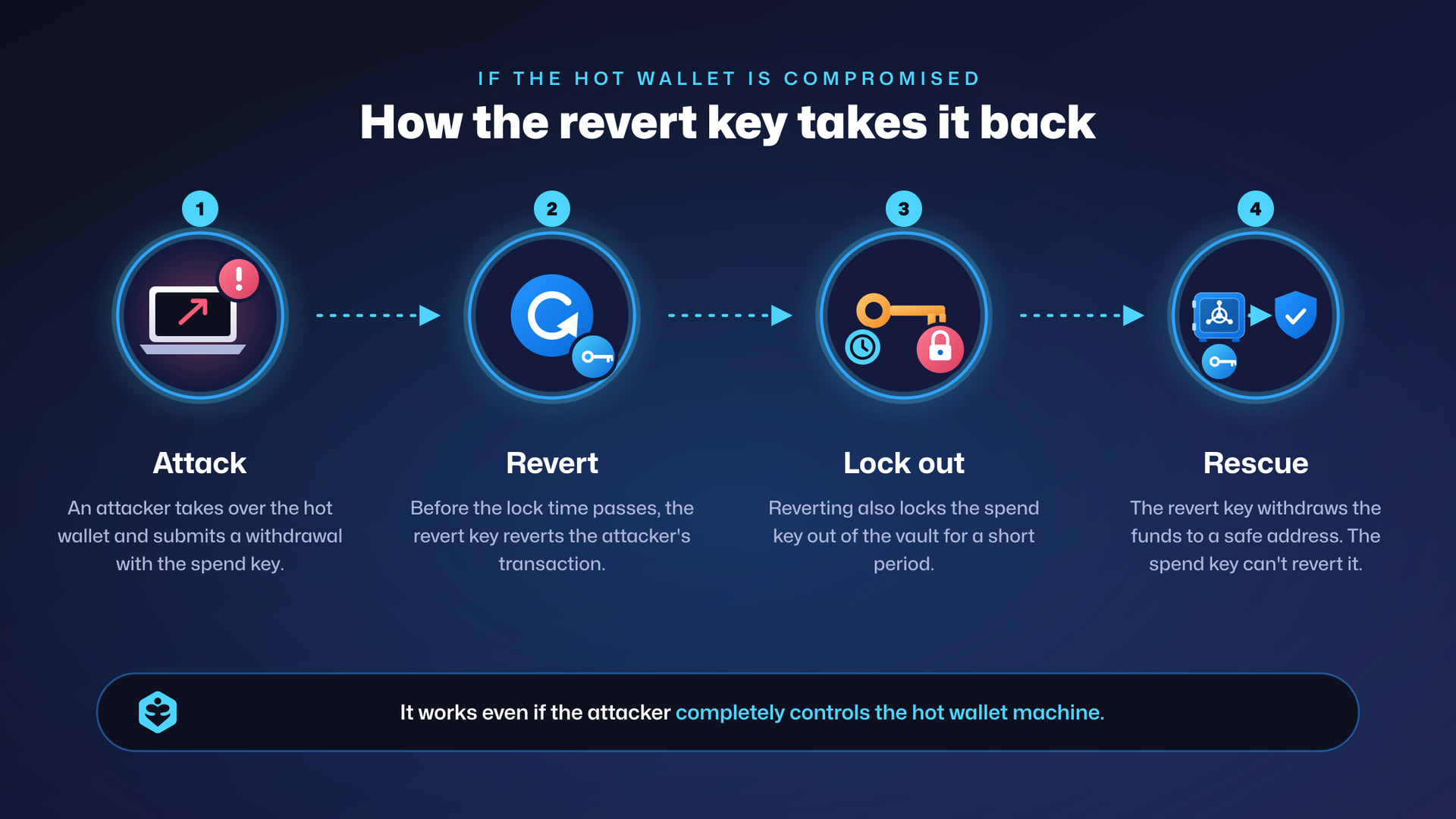
But Causevest Vaults have an additional built-in layer of protection. Instead of being controlled by a single key, a vault has a key hierarchy. In the standard form, a vault has a “spend key” and a “revert key”, with the revert key being the higher key. In normal operation the spend key initiates withdrawals and can even revert its own transactions. But if the spend key is ever compromised, the revert key can revert the spend key’s transaction, which also locks the spend key out of the vault for a short period, and then withdraw the funds to a safe address. The revert key’s withdrawal cannot be reverted by the spend key.
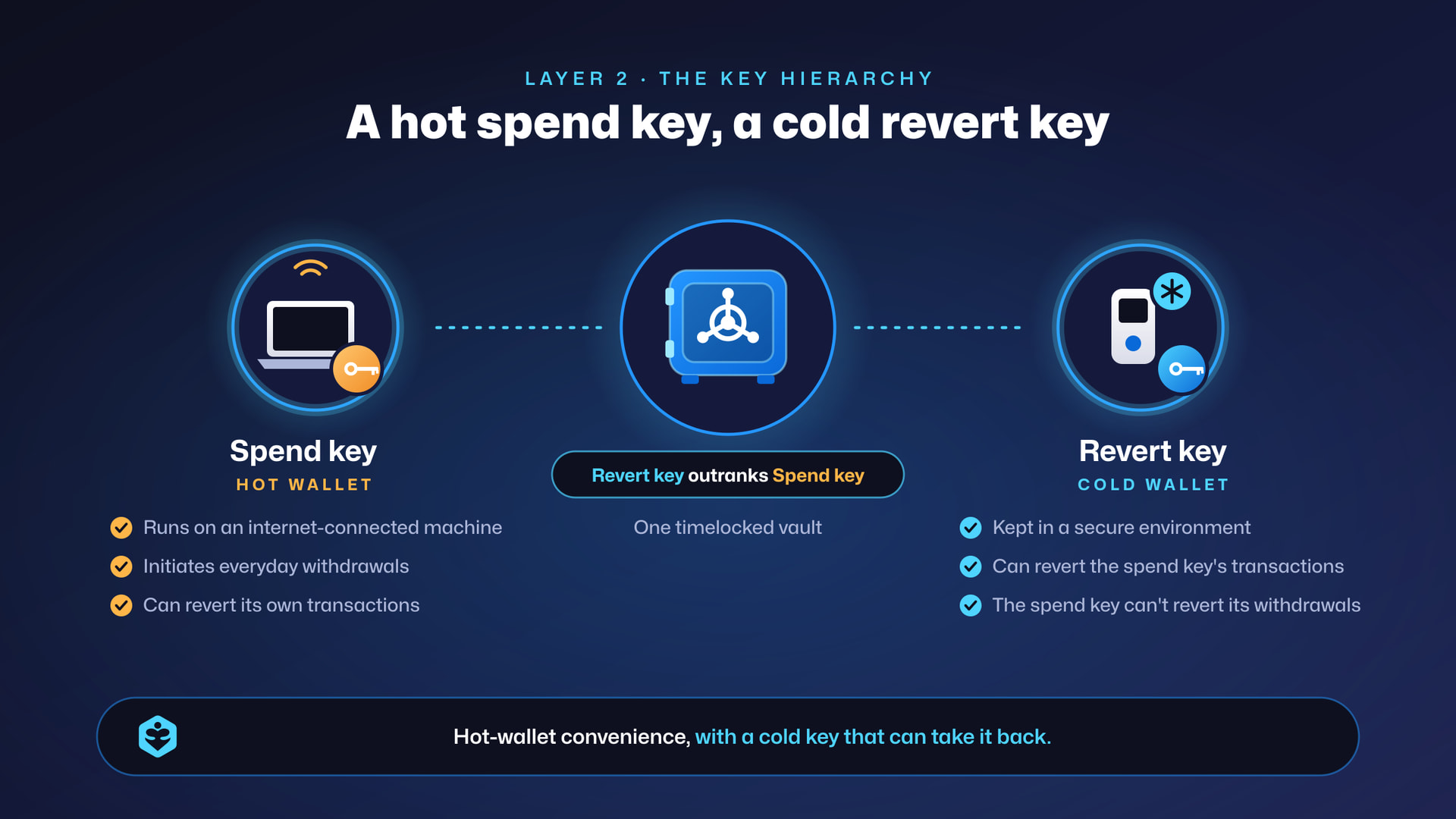
This spend/revert structure means the spend key can live in a hot wallet, processing withdrawals from an active, internet-connected machine, while the revert key acts as a cold wallet kept in a secure environment. If the hot wallet is compromised, the revert key can be retrieved and used to revert the attacker’s transactions, even if the hot wallet machine is completely controlled by the attacker. Had this been widely used, it would have protected exchange hot wallets and saved billions of dollars of assets.
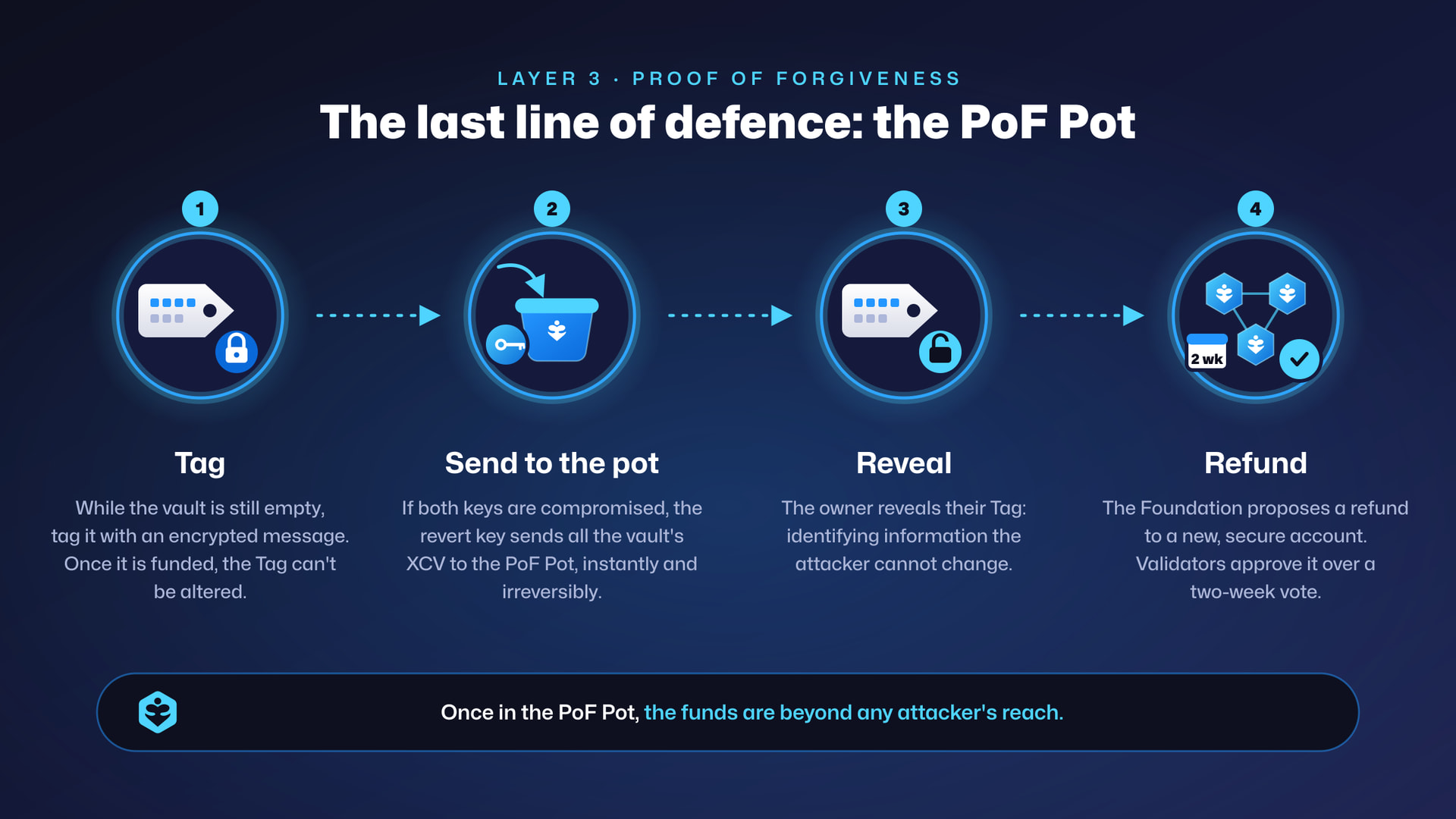
The Vault system has one final layer of protection. If both the spend and revert keys are compromised, the revert key can be used to irreversibly and instantly send all the XCV in the vault to a special on-chain pot called the Proof of Forgiveness (PoF) Pot, where no attacker can reach it. Once the funds are in the pot, the Causevest Foundation can make contact with their rightful owner and propose a refund to a new, secure account, which the network’s validators approve over a two-week voting period.
This recovery is made possible by the ability to Tag a vault address with an encrypted message. A Tag can only be applied to an empty vault, so once funds have been deposited it cannot be altered. If the vault is ever fully compromised and the funds sent to the PoF pot, the user can reveal their Tag, which contains identifying information the attacker cannot change, allowing the Foundation to identify them and route the PoF funds to their new address.
With a Causevest Vault, your funds are more secure than on any other chain. We plan to extend the Vault system to all of our Neighborhood sidechains to protect tokens, NFTs, real-world assets, and anything else on the Causevest Network. Causevest cares about your security.